Deformity Correction
Deformity Correction
Complete Guide to Surgical Correction, Recovery, and Long-Term Outcomes
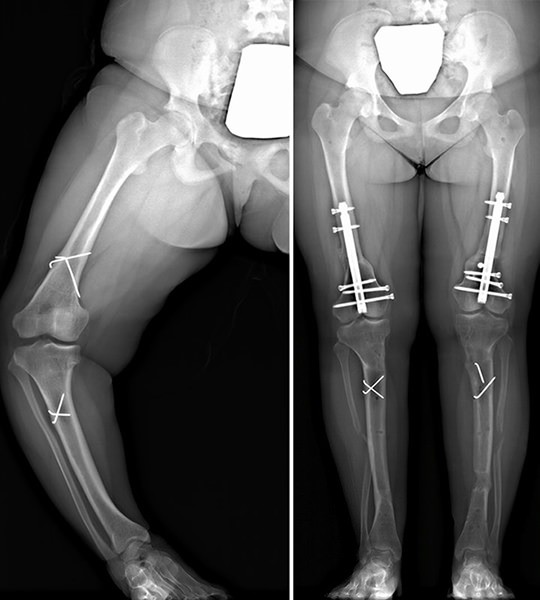
Deformity correction is a surgical procedure used to straighten bent, twisted, or misaligned bones. These procedures restore normal alignment, improve gait, reduce joint stress, and prevent or delay osteoarthritis. Deformity corrections range from simple single-plane corrections to complex multi-dimensional osteotomies and guided growth procedures in growing children.
Key Fact: Modern deformity correction techniques achieve correction rates of 85-95% with minimal complications. When properly aligned, joints experience normalized loading patterns, significantly reducing pain and slowing progression of arthritis.
Understanding Deformity Correction
Deformity correction involves surgically realigning bones to restore normal joint biomechanics. By correcting angular, rotational, or combined deformities, surgeons restore proper weight-bearing axes and improve function. Key benefits include:
Restoration of normal skeletal alignment
Correction of abnormal joint loading
Prevention or delay of arthritis progression
Improved gait mechanics and function
Reduced pain and disability
Prevention of secondary deformities
Better cosmetic outcomes
Return to normal activities and sports
Types of Skeletal Deformities
Common Deformities Requiring Correction:
Angular Deformities - Varus (bowing inward) and valgus (bowing outward) deformities affecting knees, ankles, or other joints
Rotational Deformities - Femoral or tibial torsion causing internal/external rotation
Sagittal Plane Deformities - Procurvatum (bowing forward) or recurvatum (bowing backward)
Combined Deformities - Angular + rotational + sagittal plane abnormalities
Malunion Deformities - Deformity following fracture healing in wrong position
Post-Traumatic Deformities - Deformity from previous injury or surgical complication
Congenital Deformities - Present from birth (clubfoot, bowing, dysplasia)
Acquired Deformities - Rickets, infection, tumors, arthritis-related
Pathologic Deformities - From osteogenesis imperfecta, hereditary dysplasias
Developmental Deformities - Blount disease, Legg-Calvé-Perthes, slipped capital femoral epiphysis
Surgical Techniques for Deformity Correction
Osteotomy with Fixation
Surgical cutting and repositioning of bone with internal fixation.
Subtypes:
Opening wedge osteotomy
Closing wedge osteotomy
Dome osteotomy
Cylindrical osteotomy
Plate & screw fixation
Immediate correction
Distraction Osteogenesis
Gradual lengthening and correction using external fixators.
Methods:
Ilizarov external fixator
Monolateral fixator
Hinge systems for angular correction
1 mm/day distraction rate
Simultaneous deformity & length correction
Gradual correction over weeks/months
Guided Growth (Hemiepiphysiodesis)
Temporary growth modulation in growing children.
Techniques:
Tension band plates
Eight-plate technique
Blount staples
Non-invasive approach
Works with remaining growth
Annual correction 1.7-4.8°
Combined Approaches
Multiple techniques for complex deformities.
Methods:
Osteotomy + external fixation
Osteotomy + intramedullary rod
Guided growth + osteotomy
Multi-planar corrections
Staged procedures
Customized solutions
Indications for Deformity Correction
When Deformity Correction is Recommended:
Angular Deformities: Varus or valgus deviation >10° affecting gait or causing pain
Mechanical Axis Deviation: Abnormal weight-bearing axis (HKA angle)
Joint Arthrosis: Symptomatic arthritis with associated deformity
Limb Length Discrepancy: Combined with deformity requiring correction
Pain and Dysfunction: Pain directly attributable to alignment abnormality
Malunion: Fracture healed in abnormal position causing symptoms
Cosmetic Concerns: Significant deformity affecting appearance and self-image
Degenerative Joint Disease Prevention: Deformity likely to accelerate arthritis
Secondary Deformity Prevention: Risk of progression without correction
Return to Function Goals: Athletic or work activity requirements
Benefits and Risks of Deformity Correction
Key Benefits
✓ Restoration of normal alignment ✓ Normalized joint loading ✓ Pain reduction ✓ Improved gait mechanics ✓ Reduced arthritis progression ✓ Better function ✓ Improved appearance ✓ Return to activities ✓ Prevention of complications ✓ Improved quality of life
Potential Complications
⚠ Infection (1-5%) ⚠ Nonunion/delayed union ⚠ Under/overcorrection ⚠ Loss of correction ⚠ Pin site complications ⚠ Nerve injury (1-5%) ⚠ Vascular injury (rare) ⚠ Stiffness (5-10%) ⚠ Hardware problems ⚠ Need for revision (5-10%)
Complication Profile and Rates
Complication | Typical Frequency | Clinical Significance |
|---|---|---|
Infection (superficial/pin site) | 1-5% | Usually managed with antibiotics and local care |
Delayed Union | 5-15% | Slow healing; extended external fixation may be needed |
Nonunion | 2-6% | Serious; may require revision surgery |
Under-Correction | 5-10% | Insufficient correction; may need revision |
Over-Correction | 5-10% | Excessive correction creating opposite deformity |
Loss of Correction | 2-5% | Deformity recurs; may need re-operation |
Joint Stiffness | 5-10% | Limited range of motion; usually improves with PT |
Nerve Injury | 1-5% | Usually temporary; rarely permanent |
Hardware Complications | 5-15% | Breakage, loosening, or removal needed |
Need for Revision Surgery | 5-10% | Secondary procedure to achieve or maintain correction |
Recovery Timeline
Phases of Recovery by Treatment Method
Immediate Post-Operative (Days 1-7)
Hospital stay with pain management, wound monitoring, and initial immobilization. Physical therapy begins with gentle exercises as tolerated.
Early Phase (Weeks 1-6)
Continued wound care and protection. Range of motion exercises progressing. Pain and swelling decrease gradually. For distraction osteogenesis, latency phase continues (7-14 days post-op), then distraction phase begins (1 mm/day). Guided growth requires cast immobilization for 4-6 weeks.
Intermediate Phase (Weeks 6-12)
For osteotomy with fixation: sutures removed, progressive strengthening. For distraction osteogenesis: distraction phase continues (gradual lengthening at 1 mm/day). For guided growth: radiographs assess progression of correction.
Late Phase (Months 3-6)
For osteotomy: union visible on imaging, progressive return to activity. For distraction osteogenesis: consolidation phase begins (bone hardening), fixation frame stabilized. For guided growth: continued correction phase, monitoring of deformity reduction.
Extended Phase (6-12+ Months)
Bone remodeling and maturation. Hardware removal may occur (6-12+ months for osteotomy). For distraction osteogenesis: external fixator removed (typically 3-12 months after surgery), then post-frame rehabilitation. For guided growth: frame removal once correction achieved, typically 6-18 months.
Typical Treatment Durations
Osteotomy with Plate Fixation: 6-12 weeks immobilization; 3-6 months return to function
Distraction Osteogenesis: 3-12 months in external fixator; 6-12 months post-frame rehabilitation
Guided Growth: 6-18 months to achieve correction; implant removal then followed by bracing
Combined Procedures: 6-18+ months depending on complexity
Rehabilitation and Physical Therapy
Critical Role of Rehabilitation
Structured physical therapy is essential for achieving optimal functional outcomes. Early motion prevents stiffness, restores strength, and normalizes gait mechanics. The rehabilitation approach varies significantly based on the correction method used.
Phase 1: Protection Phase (Weeks 0-2)
Goal: Protect surgical repair and manage pain.
Focus on elevation, ice, gentle ROM within protected range, pain control, and wound care.
Phase 2: Early Motion Phase (Weeks 2-6)
Goal: Restore mobility and prevent stiffness.
Progress from passive to active-assisted ROM. Begin gentle strengthening exercises around immobilized segment.
Phase 3: Progressive Strengthening (Weeks 6-12)
Goal: Build strength and endurance.
Advance to active ROM and resistance exercises. Begin gait training with assistive devices as needed. Progressive weight-bearing as appropriate.
Phase 4: Return to Function (3-6 Months)
Goal: Return to normal activities.
Sport-specific or work simulation training. Full weight-bearing achieved. Progressive return to normal movement patterns.
Key Research Findings on Rehabilitation:
Early mobilization improves outcomes and reduces stiffness
Formal physiotherapy superior to home exercises alone
Progressive weight-bearing accelerates bone healing
Gait training corrects abnormal movement patterns
Correction alignment improves gait biomechanics toward normal
Strength training restores muscle function (4-6 months)
Extended rehabilitation improves long-term outcomes
Compliance with therapy critical for success
Outcomes by Deformity Type
Expected Outcomes and Correction Rates:
Varus/Valgus Deformities (Osteotomy): 85-95% achieve satisfactory correction; mechanical axis typically corrected 3-10°; functional improvement 80-90%
Angular Knee Deformities (Guided Growth): 4.75°/year average correction rate; 6-18 months to achieve goal; 90%+ achieve target alignment
Distraction Osteogenesis: Full deformity correction achieved in 95%+ cases; simultaneous lengthening possible; union rates 93-98%
Malunion Corrections: 85-90% achieve satisfactory alignment; pain relief 75-85%; function improvement significant
Complex Multi-Dimensional Deformities: 75-85% achieve adequate correction; staged procedures may be needed; 10-15% revision rate
Hallux Valgus (Bunion): Hallux valgus angle reduced from 37.5° to 14.5°; 90% patient satisfaction; <5% recurrence
Factors Affecting Correction Success
Patient Factors
Age: Younger patients have better healing and remodeling
Bone Quality: Osteoporosis or dysplasia affects fixation and union
Smoking: Significantly delays healing
Nutrition: Adequate protein essential for bone healing
Comorbidities: Diabetes, kidney disease may impair healing
Compliance: Adherence to therapy critical for outcomes
Deformity Severity: Mild deformities correct faster than severe
Technical Factors
Surgical Technique: Proper execution of correction crucial
Fixation Quality: Rigid fixation allows early mobilization
Anatomic Reduction: Accurate alignment essential for outcomes
Soft Tissue Management: Gentle tissue handling reduces complications
Correction Amount: Appropriate not excessive correction optimal
Multi-Planar Correction: Address all deformity components
Comparison: Osteotomy vs. Guided Growth vs. Distraction
Choosing the Right Technique
Osteotomy with Fixation: Best for immediate correction in non-growing or mature patients. Plate fixation provides rigid stabilization and early mobilization. Results in 6-12 week union and rapid return to function.
Guided Growth: Optimal for growing children with moderate deformities and >2 years growth remaining. Non-invasive approach works with natural bone growth. Requires 6-18 months but avoids major surgery in children.
Distraction Osteogenesis: Best for severe deformities, limb length discrepancy, or bone loss. Allows simultaneous correction and lengthening. Requires 3-12 months in external fixator but achieves excellent healing with minimal complications.
Choice depends on: Patient age, remaining growth, deformity severity/type, need for lengthening, tissue quality, patient preference.
Pre-Operative Planning and Imaging
Critical Pre-Operative Steps:
Full-Length Radiographs: Long-leg films showing entire mechanical axis
Multi-Planar Assessment: AP, lateral, and rotational deformity measurements
3D CT/Advanced Imaging: Complex cases benefit from 3D reconstruction
Mechanical Axis Calculation: Determine hip-knee-ankle (HKA) angle and target alignment
Correction Planning: Calculate precise correction amount needed
Surgical Approach Selection: Choose optimal technique for deformity type
Optimization: Address medical comorbidities, smoking cessation, nutritional support
Conclusion
Deformity Correction for Restored Function
Modern deformity correction techniques have revolutionized the treatment of angular, rotational, and combined bone deformities. With precise surgical planning, appropriate technique selection, and evidence-based rehabilitation, patients achieve excellent functional outcomes, normalized joint loading, reduced pain, and prevention or delay of arthritis progression.
Key Advantages of Correction:
Restoration of normal skeletal alignment
Normalization of joint loading forces
Pain relief in majority of patients
Prevention of arthritis progression
Improved gait mechanics
Return to normal activities and sports
Improved self-image and confidence
Prevention of secondary deformities
Critical Success Factors:
Experienced surgeon in deformity correction
Appropriate surgical technique selection
Accurate pre-operative planning and measurement
Precise intra-operative correction
Early mobilization and structured rehabilitation
Patient compliance with therapy program
Close follow-up for complication detection
Realistic patient expectations about timeline
If you have a deformity affecting your function, appearance, or causing pain, discussion with an experienced orthopedic surgeon about the benefits of surgical correction may help you achieve normal alignment, improved function, and better long-term joint health.