Hip Joint Replacement


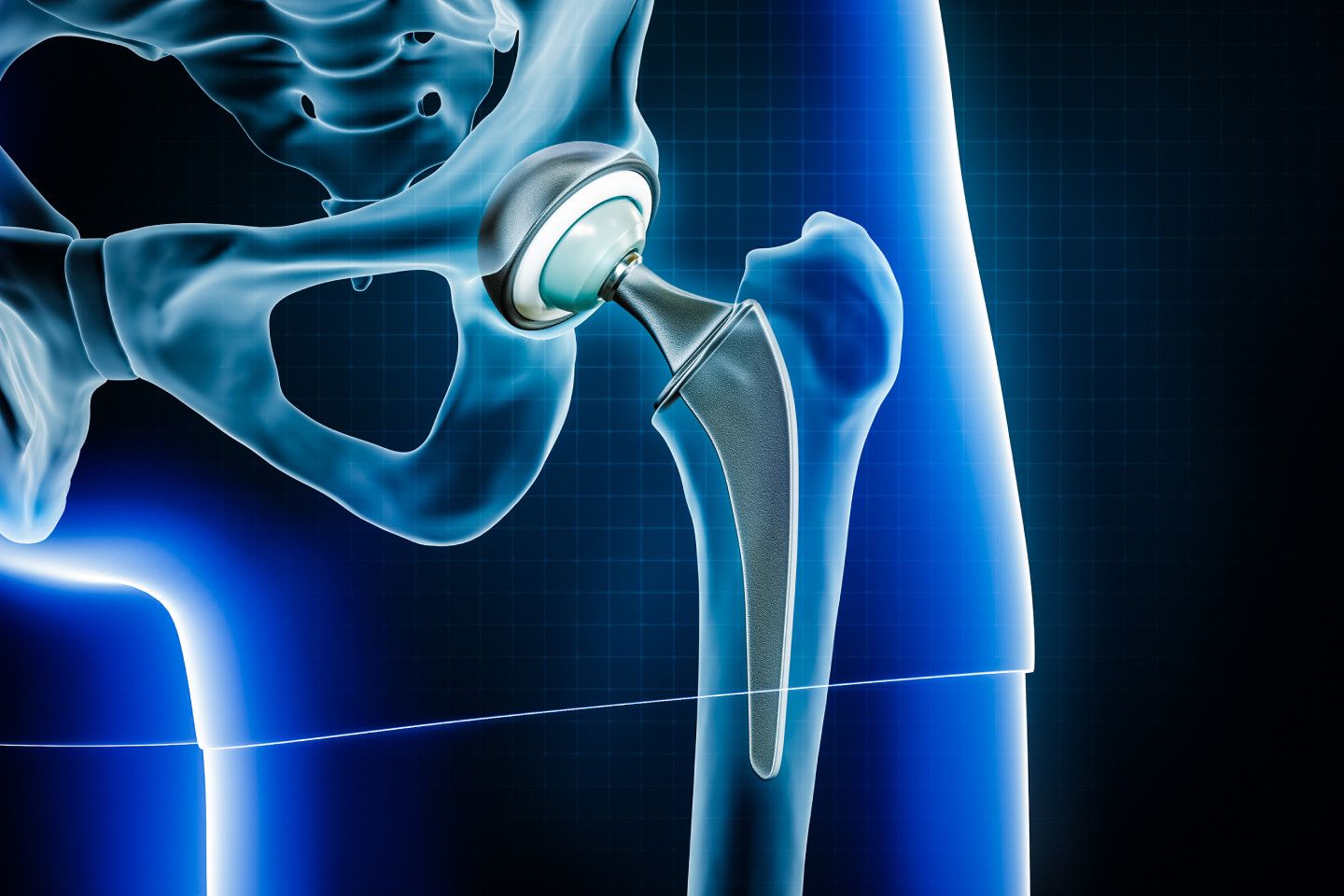
Total hip arthroplasty (THA), commonly known as hip joint replacement, is one of the most successful and cost-effective surgical procedures in modern orthopaedics. It restores function and relieves pain in patients with end-stage hip joint disease, most often caused by osteoarthritis. With more than a century of evolution, THA today benefits from refined implant designs, varied surgical approaches, and improved perioperative protocols. This review summarises the history, indications, surgical techniques, implant choices, outcomes, complications, and rehabilitation principles of hip joint replacement, drawing on contemporary evidence from PubMed-indexed literature.
Introduction
The hip joint is a ball-and-socket articulation that bears significant mechanical load during standing, walking, and running. When the joint surface is destroyed by disease or injury, conservative management often fails to control pain and disability, and surgical replacement becomes the preferred treatment.
The first attempt at replacing the femoral head was made by Themistocles Glück in 1891, using ivory to reconstruct hips damaged by tuberculosis, followed in 1925 by Marius Smith-Petersen's mold arthroplasty using glass. The procedure was significantly advanced by Sir John Charnley in the 1960s, and decades of refinement in materials and design led to outcomes so consistent that, in 2007, THA was described in the Lancet as the "operation of the century."
Today, THA is performed in vast numbers worldwide. A recent systematic review and meta-analysis identified more than 1.9 million total hip arthroplasties across 29 clinical studies and eight national joint registries when assessing long-term survivorship.
Indications for Hip Joint Replacement
The single most common reason for hip replacement is end-stage osteoarthritis. Hip osteoarthritis has an incidence of approximately 88 symptomatic cases per 100,000 patients per year and represents the leading diagnosis prompting THA. Other underlying conditions include hip osteonecrosis, congenital hip disorders, and inflammatory arthritis.
Common indications include:
Primary osteoarthritis — the most frequent indication overall
Osteonecrosis (avascular necrosis) of the femoral head
Rheumatoid arthritis and other inflammatory arthropathies
Post-traumatic arthritis, often following acetabular or proximal femoral fractures
Developmental dysplasia of the hip and other structural deformities
Femoral neck fractures, particularly in older patients
Rapidly progressive osteoarthritis of the hip (RPOH)
In younger patients, the indication mix differs. A large cohort analysis of patients aged 15 to 45 years categorised THA indications into primary osteoarthritis, osteonecrosis, structural deformities, post-traumatic osteoarthritis, and rheumatoid arthritis, and tracked both 90-day and 10-year complication and revision rates by group.
Rapidly progressive hip disease is a particularly challenging indication. Rapidly progressive osteoarthritis of the hip — defined by joint space loss of 2 mm or more per year, or 50% or more within one year, with no other identifiable cause — typically leaves total hip arthroplasty as the only viable treatment. A systematic review of 270 patients with this condition (mean age 71) noted that THA in this setting is associated with greater blood loss, longer operative time, and increased procedural complexity, often requiring adjuncts such as cages or revision-style implants.
Indication criteria are increasingly formalised. National consensus initiatives now specify the combination of radiographic findings, pain severity, functional impairment, and failure of conservative treatment that should be present before recommending replacement, helping to standardise decisions across institutions.
Surgical Approaches
Several approaches can be used to enter the hip joint. The choice depends on surgeon experience, patient anatomy, and the implant being used. The most common approaches are the direct anterior, posterior, and lateral (anterolateral) approaches.
Direct Anterior Approach (DAA)
The direct anterior approach has gained considerable popularity among both surgeons and patients. It appears to offer better early outcomes in terms of pain, rehabilitation, and length of hospital stay, although no long-term advantage over posterior or lateral approaches has been demonstrated. Adequate formal training, intraoperative fluoroscopy, and surgeon experience are essential to keep complication rates low.
Posterior Approach
The posterior approach remains the most widely used worldwide. It gives excellent exposure of both the femur and acetabulum and is technically more familiar to most surgeons. Historically it has been associated with a slightly higher dislocation risk than other approaches, but careful capsular and soft-tissue repair has largely mitigated this concern.
Comparative Outcomes
Comparative studies have generally found the approaches to be equivalent in the longer term. A multicentre randomised trial comparing direct anterior and posterior approaches, with an average follow-up of 55 months, found similar hospital length of stay, functional outcome, pain, implant position, and complication rates between the two. There was a trend toward better early functional outcome with the anterior approach, peaking at four weeks, but the direct anterior approach took significantly longer to perform (69.9 vs 45.7 minutes on average).
Another prospective comparison found that both approaches produced equivalent functional results at 3 and 12 months, while the anterior approach showed a statistically — though not clinically — significant improvement in self-reported HOOS JR scores at 3 months. The anterior approach has nevertheless been linked to higher rates of certain perioperative complications, including trochanteric fracture, femoral cortical perforation, lateral femoral cutaneous nerve neuropathy, and wound problems in patients with higher BMI. Surgeons typically need between 20 and 50 cases to navigate the anterior approach learning curve safely.
A multi-surgeon prospective cohort study of 188 THA patients across direct anterior, lateral, and posterior approaches showed that direct anterior and posterior patients walked significantly further than lateral approach patients on the third postoperative day.
Implant Design and Bearing Surfaces
A modern hip prosthesis consists of:
An acetabular component (cup), usually fixed to the pelvis by press-fit and porous ingrowth or, less commonly, by cement
A liner made of highly cross-linked polyethylene, ceramic, or metal
A femoral head of ceramic or metal
A femoral stem, fixed in the femoral canal by cement or by biological (press-fit) fixation
Bearing surface choice influences wear rates and long-term survivorship. Porous tantalum acetabular cups have been compared with conventional titanium cups in both primary and revision THA, with systematic reviews evaluating radiographic measures (such as cup migration and osteointegration), clinical functional scores, patient-reported outcomes, and complications.
Complications
Although THA outcomes are generally excellent, complications do occur and must be anticipated.
Periprosthetic Joint Infection (PJI)
Infection is among the most feared complications. A systematic review and meta-analysis of 21 studies on two-stage revision THA for periprosthetic joint infection identified good-quality evidence that obesity, liver cirrhosis, and previous failed PJI revisions are non-modifiable risk factors for treatment failure, while intravenous drug use and smoking are modifiable risk factors. Reoperation between revision stages was also significantly associated with increased risk of failure.
Disease-Specific Complication Risk
Patients with rheumatoid arthritis have a different risk profile from those with osteoarthritis. A meta-analysis of 23 studies including 877,695 patients found that patients with rheumatoid arthritis had higher odds of revision (OR 1.15), dislocation (OR 2.31), periprosthetic infection (OR 1.44), wound infection (OR 2.15), and revision for late infection compared with osteoarthritis patients.
Bone-Related Complications
Bone quality affects both fixation and fracture risk. Osteoporosis is linked to three major complications of THA: perioperative fracture, an increased risk of periprosthetic fracture, and late aseptic loosening. Because the population undergoing THA is aging, careful preoperative assessment of calcium-phosphorus metabolism and timely treatment of osteoporosis are increasingly important.
Other Complications
Additional concerns include dislocation, leg-length discrepancy, venous thromboembolism, nerve injury (especially the lateral femoral cutaneous nerve in anterior approaches), heterotopic ossification, and component malposition.
Special Situations
THA After Acetabular Fracture
Acetabular fractures can damage the femoral head, acetabular cartilage, labrum, and the blood supply to the femoral head. When post-traumatic osteoarthritis develops after open reduction and internal fixation, total hip arthroplasty is often required, and acceptable outcomes can be achieved with attention to specific technical points.
Eligibility Criteria and Selection
Strict adherence to eligibility criteria is sometimes debated. A retrospective single-centre analysis found no significant differences in complications, readmissions, or revisions for THA when comparing patients who met all eligibility criteria to those who did not — although THA patients who failed to meet two criteria had markedly higher odds (16.1) of suffering a complication.
Rehabilitation
Rehabilitation begins as soon as the procedure is complete. Modern protocols emphasise:
Early mobilisation, often on the day of surgery
Multimodal pain control with reduced opioid reliance
Progressive weight bearing as tolerated, particularly with anterior approaches
Targeted strengthening of hip abductors and core musculature
Gait retraining and balance work
With the anterior approach, patients are usually permitted to bear weight as tolerated immediately after surgery and can resume most prior activities once home. Case-report data describe a young female patient regaining normal gait, walking continuously for 20 minutes, and returning to safe independent activity within 17 days and seven home physiotherapy visits after surgery.
Prehabilitation — exercise and patient education before surgery — is also gaining attention as a way to improve postoperative recovery, though evidence for its effect on long-term outcomes remains an active area of research.
Future Directions
Several trends are shaping the next decade of hip replacement:
Robotic and computer-navigated surgery to improve component positioning
Patient-specific implants matched to individual anatomy
Enhanced recovery after surgery (ERAS) pathways reducing length of stay
Advanced bearing surfaces with lower wear rates
Registry-driven quality improvement using national joint registry data
Better infection prevention and treatment, including refined two-stage revision protocols
Conclusion
Hip joint replacement has evolved over more than a century into one of the most dependable interventions in modern medicine. For appropriately selected patients with end-stage hip disease, THA reliably reduces pain, restores function, and improves quality of life. Outcomes continue to improve with refinements in surgical technique, implant technology, perioperative protocols, and rehabilitation. Risks such as periprosthetic infection, dislocation, bone-related complications, and revision remain important and require careful patient selection, surgical execution, and follow-up. Continued data from large registries and well-designed clinical studies will further sharpen the indications and techniques for this remarkable procedure.