Limb lengthening

Main Logo

Limb Lengthening

Comprehensive Guide to Distraction Osteogenesis, Surgical Techniques, Recovery, and Outcomes

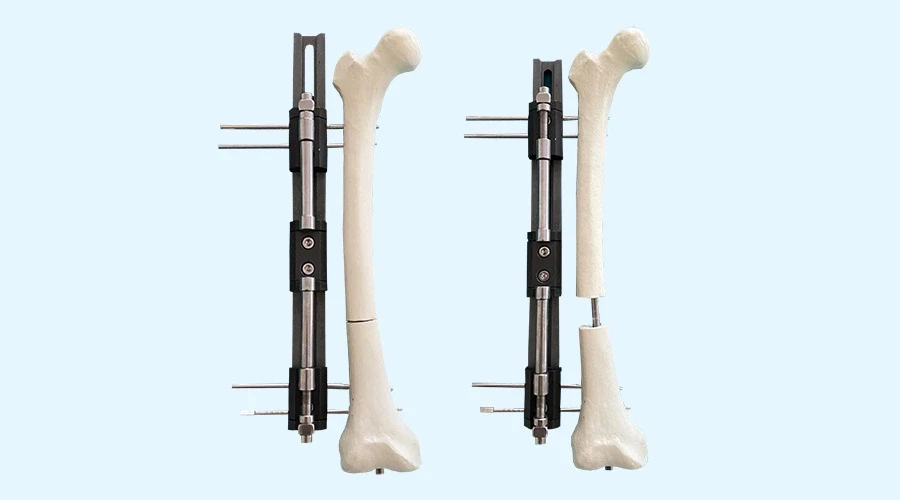
Limb lengthening, also known as distraction osteogenesis, is a surgical technique used to gradually lengthen bones to correct limb length discrepancies, short stature, or to address bone defects. Over the past several decades, this procedure has evolved from experimental surgical technique to a well-established treatment modality with proven efficacy and acceptable complication rates when performed by experienced surgeons.

Key Fact: Distraction osteogenesis is a biologic process that creates new bone through gradual mechanical distraction, allowing patients to gain significant limb length (typically 2-10 cm or more) while potentially correcting deformities simultaneously. With modern techniques and devices, the procedure has become safer and more predictable than ever before.


Understanding Limb Lengthening and Distraction Osteogenesis

Limb lengthening is based on the principle of distraction osteogenesis—the biologic process of new bone formation in response to gradual mechanical traction. The technique involves:

  • Surgical cutting (osteotomy) of the bone

  • Latency period (typically 5-7 days) to allow healing at the osteotomy site

  • Distraction phase with gradual daily lengthening (typically 1 mm per day)

  • Consolidation/hardening phase as new bone matures

  • Removal of fixation device once bone is strong

This procedure can be used for the femur (thighbone), tibia (shinbone), humerus (upper arm), radius/ulna (forearm), and other bones. Different patient populations and pathologies require individualized treatment approaches.


Indications for Limb Lengthening

Limb lengthening is indicated for various conditions affecting bone length and function. Patient selection is critical for successful outcomes.

Primary Indications for Limb Lengthening:

  1. Limb Length Discrepancy (LLD) - Difference in length between two limbs due to various causes (congenital, traumatic, post-surgical)

  2. Achondroplasia (Dwarfism) - Most common genetic cause of short stature

  3. Hypochondroplasia - Similar to achondroplasia but less severe

  4. Turner Syndrome - Genetic condition causing short stature in females

  5. Congenital Limb Deformities - Developmental abnormalities affecting limb length and alignment

  6. Post-Traumatic Limb Shortening - Shortening following fractures with bone loss

  7. Segmental Bone Defects - Large gaps in bone requiring reconstruction

  8. Idiopathic Short Stature - Constitutional short stature without specific genetic cause

  9. Cosmetic Height Enhancement - Request for increased height in appropriately selected adults


Patient Selection Criteria

Candidates for limb lengthening should be age 13-15 years minimum, have realistic expectations, be psychologically prepared for lengthy treatment (3-12+ months), have sufficient bone quality, be willing to participate in intensive rehabilitation, and have good general health.


Surgical Techniques and Devices

Ilizarov External Fixator

Circular ring fixator with wires and half-pins; gold standard for complex deformity correction.

Advantages:

  • Excellent deformity correction

  • Multiple planes of correction possible

  • Good bone contact and stability

  • Allows early weight-bearing

  • Proven long-term outcomes


Motorized Intramedullary Nails (FITBONE, PRECICE)

Internal lengthening devices; lengthening controlled remotely or magnetically.

Advantages:

  • No external fixation device visible

  • No pin site care required

  • Better cosmetics

  • May reduce infections

  • Allows near-normal activities


Lengthening Amounts and Expectations

Safe Lengthening Guidelines

Recommended Amount: Lengthening should not exceed 25% of the initial bone length in a single setting for optimal complication rates.

Average Gains by Indication:

  • Achondroplasia/Hypochondroplasia: Average 9.5 cm per limb (best healing index of 30.8 days/cm)

  • Turner Syndrome: Average 7.7 cm per limb (healing index 45.1 days/cm)

  • Constitutional Short Stature: Average 6.1 cm per limb

  • Limb Length Discrepancy: Average 4.0 cm (range 2.5-9.5 cm)


Benefits and Risks of Limb Lengthening

Key Benefits

✓ Correction of limb length discrepancy ✓ Achievement of functional length gains ✓ Improved gait and biomechanics ✓ Psychological benefits (increased height) ✓ Simultaneous deformity correction possible ✓ Restoration of bone stock (not replacement) ✓ Biologic new bone formation ✓ No prosthesis needed

Potential Complications

⚠ Pin site infections (external fixation) ⚠ Deep infection (less common, ~1-2%) ⚠ Premature consolidation ⚠ Regenerate fracture ⚠ Muscle weakness and contractures ⚠ Foot deformities (equinus) ⚠ Nerve injury/paresis ⚠ Vascular injury (rare) ⚠ Prolonged treatment course


Complication Profile


Complication Category

Frequency

Clinical Significance

Pin Site Infection (superficial)

10-30%

Managed with local care and antibiotics

Deep Infection

1-2%

Serious; may require antibiotics/treatment

Premature Consolidation

3-8%

Incomplete lengthening; may need re-distraction

Delayed Consolidation

Variable

Prolonged fixation time; monitor for healing

Regenerate Fracture

5-10%

May require re-fixation

Foot Equinus (plantar flexion deformity)

6-25%

Preventable with Achilles tenotomy

Muscle Weakness/Shortening

Common

Usually resolves with rehabilitation

Peroneal Nerve Paresis

<5%

Usually temporary; rarely permanent

Arthrofibrosis (joint stiffness)

Variable

Managed with intensive physiotherapy


Recovery Timeline and Duration

Phases of Treatment

Pre-Operative Phase (1-4 weeks before surgery)

Preparation for surgery:

  • Medical evaluation and optimization

  • Patient education about procedure and lifestyle impact

  • Psychological assessment (especially for cosmetic cases)

  • Physical therapy baseline assessment

Surgical Phase (Day 0-1)

Operative procedure:

  • Osteotomy (bone cutting) under general anesthesia

  • Fixation device (external frame or internal nail) applied

  • Hospital stay typically 1-2 days

Latency Phase (Days 1-7)

Rest period before distraction begins:

  • No lengthening during this period

  • Allows early callus formation at osteotomy site

  • Pain management and initial rehabilitation

  • Allows soft tissues to adapt

Distraction Phase (Weeks 2-10+, typically 2-4 months)

Active lengthening period:

  • Daily incremental lengthening (typically 1 mm per day = 3.5 cm per month)

  • Most intensive and challenging phase

  • Requires frequent patient follow-up and adjustments

  • New bone formation occurs with stretching

  • Pain and muscle weakness peak during this phase

  • Duration depends on amount of lengthening desired

Consolidation Phase (Months 2-8+)

Bone maturation and hardening:

  • Lengthening stops; new bone continues to mineralize

  • Gradual improvement in strength and function

  • Fixation device typically kept in place for bone hardening

  • Duration varies: typically 2-4 months or more

  • Early weight-bearing may be permitted

  • Intensive physiotherapy continues

Frame Removal Phase (Months 3-12+)

Removal of fixation device:

  • Device removal when bone is sufficiently consolidated

  • Radiographic confirmation of healing required

  • May benefit from intramedullary nail for protection

  • Transition to weight-bearing as tolerated

Post-Frame Rehabilitation Phase (Months 3-12+ after removal)

Functional recovery:

  • Progressive strengthening and conditioning

  • Restoration of normal gait

  • Return to activities as function improves

  • Potential for intramedullary nail removal at 1+ year

  • Long-term follow-up for complications

Total Treatment Duration

Average treatment time: 21-31 months from start to complete bone consolidation and device removal, depending on lengthening amount and indication.

  • Proportionate short stature: Average 21 months

  • Disproportionate short stature: Average 31 months

  • Limb length discrepancy: Typically shorter (varies by amount)


Rehabilitation and Physiotherapy

The Critical Role of Rehabilitation

Intensive physiotherapy is absolutely essential throughout all phases of limb lengthening. Physical therapy helps maintain muscle strength, prevent contractures, restore joint motion, and facilitate functional recovery. Early mobilization improves outcomes significantly.


Phase 1: Immediate Post-Operative (Days 1-7)

Goal: Protect surgical site, manage pain, begin early mobilization.

Focus on gentle passive range of motion, ankle and knee exercises, pain management, and patient education about device care.


Phase 2: Latency and Early Distraction (Weeks 1-4)

Goal: Begin active range of motion and light strengthening.

Progress to open and closed kinetic chain exercises, ankle pumps, knee bends, and hip exercises to prevent muscle atrophy.


Phase 3: Active Distraction (Weeks 4-12+)

Goal: Maintain and improve muscle strength despite distraction.

Progressive resistance exercises, walking programs (with walker initially), proprioceptive training, and Achilles stretching to prevent foot deformities.


Phase 4: Consolidation Phase (Months 2-8+)

Goal: Restore functional strength and mobility.

Progressive weight-bearing, increased resistance training, gait re-education, and return to activities of daily living.


Phase 5: Post-Frame Rehabilitation (After device removal)

Goal: Achieve normal gait and functional strength.

Intensive strengthening, walking programs, sports training as appropriate, and long-term conditioning.


Key Research Findings on Rehabilitation:

  • Open and closed kinetic chain exercises both beneficial

  • Proprioceptive retraining essential for gait restoration

  • Prevention of muscle weakness and contractures critical

  • Achilles stretching and Achilles tenotomy prevent foot deformities

  • Early ambulation with walker from first week post-op improves outcomes

  • Comprehensive physiotherapy improves ankle function

  • Long-term exercise beneficial for maintaining gains


Outcomes by Diagnosis

Expected Outcomes by Condition:

  • Achondroplasia (Dwarfism): Best outcomes; average gain 9.5 cm; 43.8% complication rate with disproportionate stature; better healing index (30.8 days/cm); significant improvements in appearance and self-esteem

  • Turner Syndrome: Average gain 7.7 cm; slower healing (45.1 days/cm); good functional and cosmetic outcomes with appropriate indication

  • Constitutional Short Stature: Average gain 6.1 cm; healing index 32 days/cm; cosmetic benefits variable depending on motivation

  • Limb Length Discrepancy: Average gain 4.0 cm; 14% complication rate; generally good functional outcomes; low rates of serious complications when limited to discrepancies <5 cm per bone

  • Post-Traumatic Shortening: Variable outcomes; good functional results with moderate difficulty on quality of life measures


Factors Associated with Better Outcomes

Patient and Clinical Factors Predicting Success

  • Diagnosis: Achondroplasia tolerates larger lengthening with fewer complications than other diagnoses

  • Age: Younger patients (13-18 years) generally have better healing indices

  • Lengthening Amount: Limiting to 25% of bone length reduces complications

  • Technique: Modern techniques with Garches device show lower complication rates (7%) than traditional methods

  • Surgeon Experience: Centers with high case volume show better outcomes

  • Patient Compliance: Adherence to physiotherapy and follow-up critical for success

  • Psychological Readiness: Realistic expectations improve satisfaction and outcomes

  • Supporting Care: Close follow-up for early complication detection and treatment


Pre-Operative Preparation and Counseling

Important Pre-Operative Considerations

  • Medical Optimization: Ensure good general health; control any comorbidities

  • Psychological Evaluation: Assessment critical, especially for cosmetic cases

  • Realistic Expectations: Understand lengthening amounts, treatment duration, and potential complications

  • Commitment to Rehabilitation: Understand need for 6-12+ months intensive physiotherapy

  • Impact on Life: Discuss impact on school, work, social activities during treatment

  • Family Support: Ensure family understanding and support for lengthy treatment

  • Financial Counseling: Discuss costs and insurance coverage

  • Device Care Education: Learn pin site care and device maintenance


Conclusion

Limb Lengthening as a Transformative Procedure

Limb lengthening through distraction osteogenesis represents a remarkable advance in orthopedic surgery, offering solutions for conditions that were previously untreatable. When performed by experienced surgeons with appropriate patient selection, intensive rehabilitation, and close follow-up, limb lengthening can dramatically improve function, appearance, and quality of life.


Key Advantages:

  • Correction of significant limb length discrepancies

  • Biologic bone formation (not prosthesis)

  • Simultaneous deformity correction possible

  • Improved gait biomechanics and function

  • Psychological benefits from increased height

  • Proven long-term bone viability


Critical Success Factors:

  • Appropriate patient selection with realistic expectations

  • Experienced surgical team

  • Intensive commitment to physiotherapy and rehabilitation

  • Close follow-up throughout treatment course

  • Family and social support system

  • Psychological readiness for lengthy treatment

If you have a significant limb length discrepancy, short stature, or bone defect that impacts your function and quality of life, consulting with an experienced limb lengthening surgeon at a specialized center may help determine if distraction osteogenesis is an appropriate option for your situation.

Contact Image

Schedule your consultation

Schedule your consultation

Taking care of your joint health is crucial for your overall well-being. Schedule your appointment today.

Taking care of your joint health is crucial for your overall well-being. Schedule your appointment today.