Total Knee Replacement
Total Knee Replacement (TKR)
Comprehensive Guide to Surgery, Recovery, and Long-Term Outcomes
Total Knee Replacement (TKR), also known as total knee arthroplasty (TKA), is a surgical procedure in which a damaged or diseased knee joint is replaced with an artificial prosthesis. It is one of the most successful and commonly performed orthopedic procedures worldwide, offering significant pain relief and functional improvement for patients with severe knee osteoarthritis.
Key Fact: TKR is the only curative procedure for end-stage knee osteoarthritis, and it has consistently demonstrated excellent outcomes in terms of pain relief, functional improvement, and cost-effectiveness.
Understanding Knee Osteoarthritis
Knee osteoarthritis is a progressive degenerative joint disease where the protective cartilage that covers the ends of bones gradually wears away. This leads to:
Chronic pain and stiffness
Reduced range of motion and flexibility
Swelling and inflammation
Difficulty with daily activities and walking
Decreased quality of life
The condition is particularly common in individuals over 60 years old, though it can develop at younger ages due to injury, overuse, or other joint diseases.
Indications for Total Knee Replacement
TKR is considered when knee pain and functional limitations significantly impact quality of life despite conservative treatment. Based on current clinical evidence, the key indication criteria include:
Core Indication Criteria for TKR:
Persistent Pain: Intermittent (several times per week) or constant knee pain that has lasted at least 3-6 months
Radiological Confirmation: X-ray or imaging evidence of significant knee osteoarthritis with structural joint damage
Failed Conservative Treatment: Inadequate response to non-surgical treatments for at least 3-6 months (including medications, physiotherapy, weight management, and injections)
Functional Impairment: Significant impact on quality of life and daily activities for at least 3-6 months
Patient-Reported Suffering: Patient acknowledges meaningful suffering and impairment due to the knee disease
Why Conservative Treatments May Not Be Enough
Conservative management options include:
Exercise and physiotherapy
Weight loss and lifestyle modifications
Analgesic medications
Anti-inflammatory drugs
Intra-articular steroid injections
Hyaluronic acid injections
When these therapies fail to provide adequate symptom relief, TKR becomes the gold standard surgical intervention.
The Total Knee Replacement Procedure
Surgical Steps
Anesthesia: General or regional anesthesia is administered to ensure patient comfort and immobility during surgery
Surgical Approach: The surgeon makes an incision (typically 8-10 inches) on the front of the knee, usually using an anteromedial parapatellar approach
Damaged Tissue Removal: The damaged cartilage and bone surfaces are carefully removed from the end of the femur (thighbone) and tibia (shinbone)
Bone Preparation: The remaining bone surfaces are shaped and prepared to accommodate the prosthetic components
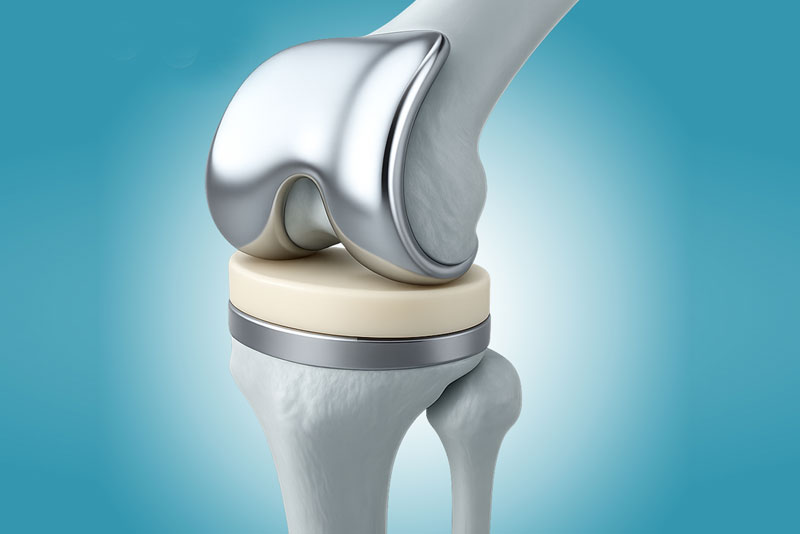
Component Placement: Three main components are implanted:
Femoral component (metal component for the thighbone)
Tibial component (metal component for the shinbone)
Polyethylene insert (spacer between metal components)
Patellar Consideration: Sometimes the undersurface of the kneecap (patella) is also resurfaced
Final Assessment: The surgeon checks knee alignment, stability, and range of motion
Closure: The incision is closed with sutures, and the wound is dressed
Procedure Duration
Total knee replacement typically takes 1-2 hours to complete. Most patients spend one night in the hospital after surgery, though some may stay longer depending on their medical condition.
Benefits and Risks of Total Knee Replacement
Primary Benefits
✓ Significant pain relief (most patients become pain-free) ✓ Improved knee stability ✓ Restored range of motion ✓ Enhanced functional capacity ✓ Improved quality of life and independence ✓ Ability to return to daily activities ✓ Long-term implant durability (>90% at 10 years)
Potential Complications
⚠ Infection (approximately 2% of patients) ⚠ Blood clots (deep vein thrombosis) ⚠ Peroneal nerve injury ⚠ Wound complications ⚠ Stiffness or limited range of motion ⚠ Persistent pain (in some patients) ⚠ Component loosening (long-term) ⚠ Implant wear (requiring revision)
Complication Rates
Research shows that approximately 2% of TKR patients experience significant immediate post-operative complications such as infection, blood clots, or nerve injury. However, with modern surgical techniques and preventive measures, serious complications are relatively uncommon.
Recovery Timeline After Total Knee Replacement
Immediate Post-Operative Period (Day 1-7)
Pain management is the primary focus. Patients typically:
Remain in the hospital or are discharged within 24 hours
Begin gentle range-of-motion exercises
Use pain management strategies (medications, ice, elevation)
Start using walking aids (crutches or walker)
Begin preventive measures for blood clots
Early Recovery Phase (Week 2-6)
Focus shifts to restoring knee function and reducing pain:
Increase range-of-motion exercises
Progress from walker to crutches to cane
Begin quadriceps and hamstring strengthening
Gradually increase weight-bearing activities
Knee ROM shows greatest change during first 12 weeks
Intermediate Recovery Phase (Week 7-12)
Significant functional improvements occur during this phase:
Knee range of motion plateaus by 26 weeks
Most patients can walk without walking aids
Stair climbing and other daily activities improve
Strength training continues
Return to light activities
Late Recovery Phase (3-6 Months)
Continued functional improvement and rehabilitation:
Patient-reported outcomes significantly improve by 3-6 months
Most patients achieve normal walking patterns
Pain levels typically reach minimum by 3 months
Gradual return to light recreational activities
Continued strengthening program
Long-Term Recovery (6-12 Months)
Maximum functional gains and adjustment to implant:
Population-level quality of life measures achieved at 12 months
Most patients reach pain and activity plateaus
Return to normal activities fully permitted
Some physical performance deficits may persist
Ongoing low-impact exercise beneficial
Rehabilitation and Physiotherapy
The Role of Rehabilitation
Rehabilitation is crucial for successful recovery. Research shows that early physiotherapy significantly improves pain relief, range of motion, and quality of life after TKR.
Phase 1: Protective Phase (Weeks 0-4)
Goal: Protect the surgical site, reduce pain, and restore basic range of motion.
Focus on gentle passive and active-assisted range-of-motion exercises, pain control, and swelling reduction.
Phase 2: Recovery Phase (Weeks 4-12)
Goal: Restore functional range of motion and begin strength training.
Emphasize progressive strengthening of quadriceps, hamstrings, and hip muscles. Introduce balance and proprioception activities.
Phase 3: Activity Phase (Weeks 12+)
Goal: Return to normal activities and sports.
Continue strength and endurance training. Progress to functional activities like stairs, walking on various surfaces, and eventually return to recreational activities as tolerated.
Key Research Findings on Rehabilitation:
Early physiotherapy significantly improves pain relief, ROM, and overall quality of life
Short-term improvements in physical function occur at 3-4 months with proper rehabilitation
No significant difference between home-based and clinic-based physiotherapy for most outcomes
Strengthening programs show particular benefit for long-term outcomes
Continued exercise program beneficial even beyond 12 months
Long-Term Outcomes and Implant Longevity
Implant Survival and Success Rates:
After 10 years: 93-98% of TKR implants remain satisfactory
After 15 years: 85-95% of implants remain functional
Long-term implant survival: Exceeds 90% at 10+ years
Primary reasons for revision: Infection, mechanical loosening, polyethylene wear, and progressive instability
Revision timing: Most revisions occur 10+ years after the initial procedure
What Happens if the Implant Fails?
If the TKR implant fails due to wear, loosening, or other complications, a revision surgery may be necessary. Revision procedures are more complex and have slightly longer recovery times than primary TKR, but modern techniques have made them increasingly successful.
Factors Affecting Recovery Outcomes
Factors Associated with Better Recovery:
Younger age (each additional year reduces successful recovery by 4%)
Lower body mass index (BMI)
Better pre-operative knee function
Adherence to rehabilitation program
Discharge to rehabilitation facilities (increases successful recovery by 6-fold)
Higher motivation and compliance
Absence of significant comorbidities
Important: Poor Outcome Risk Factors
Research identifies several factors that may predict less favorable outcomes: older age, larger comorbidity count, low income, smoking history, and being unmarried. These factors don't preclude surgery but should be discussed with your surgeon to establish realistic expectations and develop targeted support strategies.
Satisfaction and Patient Outcomes
Patient Satisfaction
The vast majority of patients report high satisfaction following TKR. Key findings from research:
Most patients report significant pain reduction—achieving pain-free or near pain-free status
Improved ability to walk, climb stairs, and perform daily activities
Enhanced quality of life and independence
Success trajectories show no decline or stagnation post-operatively; all patients experience meaningful improvement
69-72% of patients are considered "treatment responders" at 12 months
Important Outcome Domains
Research shows the three most important recovery domains for patients are:
Pain Reduction: Most critical outcome for patients
Return to Activities and Daily Living: Ability to walk, perform household tasks, and engage in activities
Mobility and Movement: Restoration of knee range of motion and overall functional capacity
Pre-Operative Preparation
Getting Ready for Surgery
Medical Evaluation: Complete blood work, ECG, and assessment of overall health
Optimize Health Conditions: Control blood pressure, blood sugar, and other chronic conditions
Quit Smoking: Smoking impairs wound healing and increases complications
Weight Management: Achieve healthier weight if possible to reduce joint stress
Pre-Operative Physiotherapy: Some evidence suggests pre-operative exercises may be beneficial
Home Preparation: Arrange transportation, modify home for accessibility, prepare support network
Mental Preparation: Understand realistic expectations and recovery timeline
Alternatives to Total Knee Replacement
Before proceeding with TKR, various alternatives may be considered depending on the specific condition and patient factors:
Unicompartmental Knee Arthroplasty (UKA): Replacement of only one compartment of the knee for localized osteoarthritis
Knee Arthroscopy: For specific conditions like meniscal tears, but limited benefit for primary osteoarthritis
Biological Approaches: Cartilage restoration procedures (limited applications)
Continued Conservative Management: Ongoing physiotherapy, injections, and medications
Note: TKR remains the gold standard and most successful surgical option for end-stage, tri-compartmental knee osteoarthritis when conservative treatments have failed.
Conclusion
The Path Forward
Total Knee Replacement is one of the most successful orthopedic procedures available today, offering substantial improvements in pain, function, and quality of life for appropriately selected patients with severe knee osteoarthritis. With long-term implant survival exceeding 90% at 10 years and high patient satisfaction rates, TKR can restore independence and enable return to meaningful activities.

Success Depends on Several Factors:
Appropriate Patient Selection: Meeting clear indication criteria and understanding realistic expectations
Expert Surgical Care: Choosing an experienced knee replacement surgeon
Dedicated Rehabilitation: Committing to physiotherapy and recovery protocols
Lifestyle Modifications: Maintaining healthy weight and activity levels long-term
If you're experiencing severe knee pain despite conservative treatment, discussing total knee replacement with your orthopedic surgeon may be the next step toward reclaiming your quality of life and independence.


